Why SMEs Still Matter In Major Infrastructure Projects
29th April 2026
As someone who has spent more than two decades working across infrastructure and engineering recruitment, one thing has always been clear to me: the success of the UK’s largest projects often depends on the smallest businesses in the supply chain.
Major infrastructure programmes, from HS2 and Heathrow expansion to national energy grid upgrades and rail modernisation projects, depend on vast and complex supply chains.
While prime contracts are typically awarded to large Tier-1 contractors, small and medium-sized enterprises (SMEs) play a crucial role in delivering specialist expertise across infrastructure projects.
Yet despite their importance, SMEs have historically faced significant barriers when trying to access large public sector contracts. Recent procurement reforms aim to change this by creating more accessible, transparent and competitive infrastructure supply chains.
From my perspective, working with organisations across rail, energy, water and aviation infrastructure, it’s clear just how critical specialist SMEs are to successful project delivery.
Time and again, we see smaller businesses providing highly specialised expertise that larger organisations simply cannot replicate at scale. Understanding both the value SME’s bring, and the challenges they face, is essential if we want to build resilient supply chains capable of delivering the UK’s long-term infrastructure ambitions.

What Is An SME?
SME stands for Small and Medium-sized Enterprise, typically defined by employee numbers and turnover.
Standard classifications include:
- Micro businesses: fewer than 10 employees
- Small businesses: fewer than 50 employees
- Medium-sized businesses: fewer than 250 employees
The UK’s Infrastructure Investment Pipeline
The UK is entering a new era of infrastructure investment across transport, energy, water and defence. According to the Infrastructure and Projects Authority, the UK Government’s infrastructure pipeline includes over £700 billion of planned and ongoing infrastructure investment across the coming decade.
Source: Analysis of the National Infrastructure and Construction Pipeline 2023 (HTML) – GOV.UK
These investments include major national programmes such as:
- HS2 high-speed rail network
- Heathrow Airport expansion
- National Grid’s Great Grid Upgrade
- Sizewell C nuclear power station
- Major rail, water and highway modernisation programmes
From my experience working with organisations across these sectors, delivering projects at this scale requires large, diverse and highly specialised supply chains. And more often than not, the expertise required to solve highly technical challenges sits within SMEs.
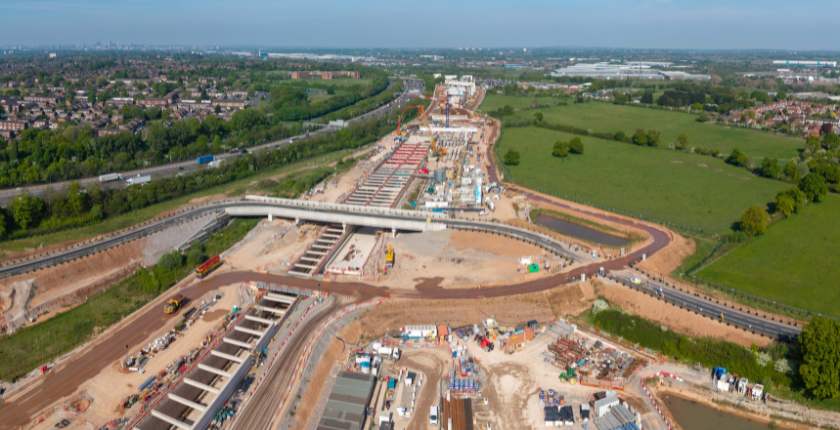
Why SMEs Matter In Infrastructure Supply Chains
Large infrastructure projects require a wide range of specialist skills. Many of these capabilities sit within SMEs rather than large corporations.
These businesses frequently deliver specialist expertise in areas such as:
- Geotechnical engineering
- Environmental consulting
- Digital engineering and BIM
- Surveying and monitoring
- Systems installation and commissioning
For example, HS2 Ltd reports that more than 70% of businesses within its supply chain are SMEs, with over 2500 SMEs working on HS2.
That statistic reflects something those of us working in infrastructure already recognise: even the largest national programmes rely heavily on smaller specialist suppliers.
Source: Small businesses win big with £millions more HS2 orders
The Scale of Infrastructure Procurement and the SME Opportunity
Despite the critical role SMEs play in the UK economy, there remains an opportunity to increase their participation in public sector procurement.
SMEs account for 99.9% of UK businesses and employ around 61% of the private sector workforce, contributing specialist expertise across many areas of infrastructure delivery.
Government procurement represents one of the largest areas of public spending in the UK, with around £400 billion invested each year.
Within this context, analysis from the British Chambers of Commerce shows that SMEs received £45.4 billion in government procurement spending in 2024, representing roughly 20% of total public sector procurement expenditure.
Source: https://www.britishchambers.org.uk/news/2025/05/procurement-act-must-quickly-deliver-for-smes
There is also a clear ambition to increase SME participation further. The UK Government has set a long-standing target for 33% of procurement spend to reach SMEs, either directly or through supply chains. More recently, updated procurement guidance introduced in 2025 requires central government departments to set and publish targets for direct SME spend and report on performance annually.
From an industry perspective, this reflects the ongoing balance procurement frameworks aim to achieve, ensuring consistency, governance, and effective risk management, while continuing to create opportunities for smaller, specialist suppliers not only to contribute to major programmes, but to access and win work through major frameworks in their own right.
Innovation And Specialist Expertise
One of the most significant contributions SMEs bring to infrastructure projects is innovation and specialist expertise.
In my experience, smaller organisations often operate much closer to the technical challenges projects are trying to solve. With simpler organisational structures, SMEs can often respond quickly to evolving requirements and internal approval processes, and they can develop and test solutions far more quickly.

SMEs Frequently:
- Solve niche engineering and technical problems
- Develop specialist technologies and methodologies
- Introduce innovative approaches to project delivery
Their scale allows smaller teams to iterate on solutions quickly and respond to evolving project requirements.
For complex infrastructure programmes, where projects often involve highly specialised engineering challenges, this ability to move quickly can be invaluable.
Agility And Speed
SMEs also bring agility to infrastructure projects.
Compared with larger organisations, SMEs often operate with:
- Fewer layers of hierarchy
- Faster decision-making
- Greater operational flexibility
In practice, this allows them to mobilise quickly and adapt to changing project needs, something that becomes increasingly important as projects evolve.
Regional Economic Growth
SME participation also plays an important role in ensuring that the economic benefits of infrastructure investment are spread across the country.
Engaging regional suppliers helps:
- Support local economies
- Create skilled employment opportunities
- Strengthen regional supply chains
For government-funded infrastructure programmes, this is increasingly important as projects are expected to deliver wider social value outcomes alongside engineering delivery.

Procurement Reform: Opening Opportunities For SMEs
The Procurement Act 2023, which came into force in February 2025, represents the largest overhaul of UK procurement law in decades.
The UK Government states that the new legislation aims to:
“Simplify procurement rules and remove barriers that prevent small businesses from accessing public sector contracts.”
Key reforms include:
- Greater transparency of procurement pipelines
- Earlier supplier engagement
- Mandatory 30-day payment terms across supply chains
- Reporting requirements for SME procurement spending
These reforms are designed to create a more competitive and accessible procurement system.

The Reality: Procurement Still Creates Barriers
Despite reforms, SMEs still encounter structural challenges when trying to access infrastructure contracts.
Framework Complexity
Many infrastructure opportunities are delivered through large procurement frameworks. Frameworks and financial thresholds play an important role in managing delivery risk, although they can sometimes present challenges for smaller specialist businesses.
Framework tenders frequently require:
- Lengthy and costly bid processes
- Complex compliance documentation
- Extensive legal and financial submissions
Research from the Federation of Small Businesses highlights that public procurement processes can be complex, and in some cases may present challenges for smaller firms in accessing opportunities, particularly where contract scale and requirements are significant
Source: Policy Report | Signed, sealed, delivered
Frameworks are designed to streamline procurement and ensure consistency. However, they can sometimes be better suited to organisations with the scale and internal resources to manage complex bidding processes, which may impact direct SME participation.
Turnover And Trading History Requirements
Another challenge I often see raised by SMEs relates to financial thresholds built into procurement criteria.
Many infrastructure tenders require suppliers to demonstrate:
- Turnover two to three times the contract value
- Three to five years of trading history
- Previous delivery of similarly sized contracts
These requirements are usually designed to manage delivery risk. But they can unintentionally exclude smaller specialist suppliers with deep technical expertise.
In some cases, a business may have exactly the right capability to solve a project challenge, yet still struggle to qualify for a tender because it lacks the financial scale procurement frameworks demand.

Binary Tender Systems And Limited Context
Modern procurement systems often rely on structured digital forms.
Suppliers may be asked to respond using:
- Yes / no responses
- Fixed tick-box answers
- Strict word limits
These systems are designed to standardise evaluation and improve fairness, but they can make it difficult for suppliers to explain complex capabilities or innovative approaches.
In my experience, many SMEs differentiate themselves through specialist knowledge, innovative thinking and collaborative delivery models, qualities that are not always easy to communicate within rigid procurement formats.
Payment Terms And Cash Flow Pressure
Cash flow remains one of the biggest challenges SMEs face when working within large supply chains. Late or delayed payments continue to place significant pressure on smaller businesses, particularly when they are operating within complex contractor structures.
Historically, SMEs have often experienced 60–90 day payment cycles when working under large contractors.
The UK Small Business Commissioner has highlighted late payments as a major barrier for smaller suppliers.
- Late payments cost small businesses billions every year
- Thousands of SMEs close annually due to cash flow problems linked to delayed payments.
New procurement reforms now require 30-day payment terms across public sector supply chains, helping to improve SME cash flow.
From an industry perspective, improving payment certainty is one of the most important steps in making infrastructure supply chains more sustainable for smaller suppliers.

The Hidden Cost Of Excluding SMEs
Where SME participation is limited within infrastructure supply chains, there can be wider implications for how projects are delivered.
In my experience, supply chains that incorporate a diverse mix of organisations, including SMEs, can benefit from increased flexibility and innovation.
When smaller specialist suppliers are unable to participate, several risks can emerge:
- Reduced innovation
- Less competition
- Higher project costs
- Fragile supply chains
Infrastructure delivery works best when supply chains are diverse, competitive and able to draw on specialist expertise from across the market.
What SME-Friendly Procurement Looks Like
Encouraging SME participation can be achieved while maintaining the high standards required for major infrastructure delivery. It involves designing procurement systems that recognise capability, expertise and innovation alongside organisational scale.
In practical terms, SME-friendly procurement might include:
- Proportional insurance and turnover requirements
- Simplified prequalification processes
- Breaking large contracts into smaller packages
- Faster payment cycles
- Stronger Tier-1 contractor accountability for SME engagement
Encouraging innovation partnerships, pilot projects, and direct SME engagement can also unlock new capabilities within infrastructure supply chains.
From my perspective, creating these opportunities benefits not just SMEs, but the projects themselves.

The Future Of SME Participation In Infrastructure
The UK’s infrastructure ambitions, from energy transition to transport modernisation, will require increasingly diverse and specialised supply chains.
Based on what I see across the infrastructure sector, SMEs will continue to play a critical role in delivering innovation, technical expertise and regional capability across these programmes.
As infrastructure investment accelerates, one reality remains clear:
Large Infrastructure Projects Still Rely On Small Businesses.
From where I sit, working with organisations across rail, energy, water and aviation infrastructure, the message is clear: the UK’s infrastructure ambitions will only be delivered through strong, collaborative supply chains. That means creating an environment where specialist SMEs can contribute alongside major contractors, bringing the innovation, expertise and agility that complex projects increasingly demand. If procurement systems continue to evolve in a way that recognises capability as well as scale, the sector will be far better positioned to deliver the infrastructure the UK needs over the coming decades.
Contributors To This Article

Andy Ridout – Managing Director. Andy leads Advance TRS, a specialist recruitment consultancy supporting infrastructure organisations across rail, energy, water, aviation and the built environment. With more than two decades of experience in engineering and infrastructure recruitment, Andy works closely with clients and candidates, delivering some of the UK’s most significant infrastructure programmes.