Artificial intelligence is changing recruitment at speed. AI-generated CVs, automated applications, and algorithm-driven screening tools now dominate job boards. Candidates can apply for hundreds of roles in minutes. Employers can screen thousands of profiles in seconds. On paper, recruitment has never been more efficient. In reality, it has never been noisier. 

AI can help increase visibility and speed up processes, but it cannot replace judgment, credibility, or sector understanding. And in specialist, regulated sectors like rail, infrastructure, aviation, water, and energy, those things matter.

Infrastructure recruitment is fundamentally built around trust. Clients need to know the people they hire can operate safely on live projects, work effectively within delivery teams, and perform under pressure in highly regulated environments.

That is why relationships still matter. At Advance TRS, our consultants are embedded in the sectors they recruit for, building long-standing relationships with clients, candidates, and project professionals across the infrastructure industry.

And despite the rise of AI in recruitment, most hiring managers still recognise the importance of human judgement in the hiring process. In fact, 93% of hiring managers believe human involvement remains essential, even with AI at work.

Source: 2025 AI in Hiring Survey Report

In infrastructure recruitment, where safety, compliance, and delivery risk matter, human judgement becomes even more important.

AI Recruitment

When Recruitment Becomes Noise 

AI has solved a volume problem. It has not solved a credibility problem. Today, hiring managers are faced with: 

  • CVs optimised for algorithms, not reality. 
  • Experience framed perfectly on paper but thin in practice. 
  • Applications that say nothing about how someone performs on site, under pressure, or within a live project team. 

AI can match keywords. It can rank profiles. It can shortlist. What it cannot do is understand context, and context is everything in infrastructure.

Job boards and AI tools can increase visibility, but visibility does not equal suitability. Many of the strongest infrastructure professionals are not actively applying for dozens of roles online. They are already delivering major programmes and moving through trusted industry relationships long before roles ever reach the open market. 

74% of hiring managers think AI can assist compatibility assessment between applicants and roles, but not replace judgment.”

Source: 2025 AI in Hiring Survey Report

When roles are safety-critical, delivery-driven and regulated, hiring mistakes are expensive. Projects do not fail because someone had the wrong job title on their CV. They fail because the wrong person was trusted in the wrong environment. 

Empty Chairs

A Specialist Market With Scarce Resources 

In reality, resources are scarce, and the most valuable professionals are rarely applying for jobs in a traditional way. In specialist sectors: 

  • Skills are limited. 
  • Experience is hard-won. 
  • Demand consistently outweighs supply. 

Many of the people delivering critical infrastructure are already embedded in long-term programmes. They are not browsing job boards, optimising CVs, or submitting multiple applications. When they do move, it is often quietly driven by: 

  • Reputation 
  • Recommendation 
  • Timing 
  • Trust in who they are speaking to. 

This means traditional recruitment strategies, even when enhanced by AI, often miss the very people clients want to hire. 

The Automation Paradox In Specialist Recruitment 

The paradox is simple: the more recruitment becomes automated, the more human judgment matters. Infrastructure recruitment is not transactional. It is: 

  • Regulated 
  • Safety-critical 
  • Compliance-driven 
  • Trust-based 

You cannot automate: 

  • Right-to-work verification 
  • Safety culture 
  • Site readiness 
  • Credibility under scrutiny 
  • How someone actually behaves on a project. 

This is why the best candidates in our sector are rarely found through mass application strategies. They are found through networks, referrals, and relationships

A majority of job seekers (around 66%) would hesitate to apply to roles screened purely by AI, due to fairness and transparency concerns.

Source: AI Recruitment Statistics 2026 

The Power of People in Recruitment

The Power Of People: Our Real Differentiator 

Advance TRS operates as a human alternative to an increasingly automated recruitment market. While many hiring processes are becoming driven by algorithms, keyword filtering, and application numbers, our consultants remain embedded in the sectors they recruit for.

  • On sites 
  • In project meetings 
  • Visiting client offices
  • Attending industry events
  • In long-standing professional networks 
  • Speaking directly with delivery teams and infrastructure professionals

That real-world visibility gives us insight no algorithm can replicate. Our business is built on conversations, not algorithms. Every month, our consultants speak with countless clients, candidates, and project professionals across the infrastructure industry, building long-term relationships and maintaining the networks that consistently deliver the strongest hires.

People Who Know People 

One of the most misunderstood aspects of recruitment is where the best hires actually come from. They do not come from mass job board applications. They come from: 

  • Referrals 
  • Long-term relationships 
  • Conversations built over years, not weeks. 

Our consultants know: 

  • Who is delivering on live programmes? 
  • Who clients trust to solve problems. 
  • Who performs well under pressure, not just on paper? 

This is not accidental. It is the result of being present in the industry, not just observing it from a distance. Advance TRS operates as a human network, not simply a CV database. 

Referrals > Algorithms 

A significant proportion of our most successful placements comes from referrals and repeat relationships. That is not a coincidence. Referrals work because they carry: 

  • Proven capability 
  • Contextual understanding 
  • Reduced risk 

In sectors where skills are scarce and delivery risk is high, trust travels faster than technology. Algorithms can widen a search. They cannot replace confidence built through experience. 

What Ai Can't Validate

Behind The CV: What AI Can’t Validate

Polished CVs are not new; AI has simply made them easier to produce. What has not changed is what clients actually need: 

  • Genuine experience 
  • Verifiable competence 
  • Right-to-work compliance 
  • Safety awareness 
  • Sector-specific credibility. 

At Advance TRS, we look beyond the document. Our process is built around: 

  • Structured qualification calls 
  • Deep questioning of real project experience 
  • Validation of safety, compliance, and site readiness 
  • Understanding how someone operates in the real world. 

AI can screen. People qualify. 

In rail and infrastructure, a polished CV only tells part of the story. What clients really need to know is whether someone can operate safely on a live project, work within pressured delivery environments, and integrate into established teams. That is not something AI can validate.

Infrastructure Recruitment Is Fundamentally Human

Infrastructure projects are delivered through trust, collaboration, accountability, and real-world decision-making. Hiring in these environments is not simply about matching keywords to job descriptions. It involves understanding:

  • Team dynamics
  • Safety culture
  • Site environments
  • Project pressures
  • Client expectations
  • Long-term capability

These are human judgments, not automated processes. Technology can support recruitment processes, but it cannot replace sector experience, relationship-led hiring, and professional judgment.

Using AI Without Losing The Human Core 

Advance TRS is not anti-AI. Used properly, AI supports: 

  • Insight 
  • Data management 
  • Efficiency 
  • Pattern recognition 

But technology is not the strategy. The strategy is to understand people, projects, and risks, and to use technology to support that understanding, not replace it. AI should free time for better conversations, deeper qualification, and stronger relationships – not remove them. 
The Power of people

The Power Of People As A Strategic Advantage 

As recruitment becomes more automated, the value of being human increases. Advance TRS stands for: 

  • Real consultants with real sector knowledge 
  • Relationships built over time 
  • Access to scarce, hard-to-reach talent 
  • Recruitment grounded in trust, safety, and compliance. 

In a noisy, automated market, we remain intentional about what matters. Because infrastructure recruitment is fundamentally human.  And in the end, people still hire people

If you are a candidate who wants to be represented by real consultants who understand your sector, your safety requirements and your career, not just your keywords, we’d love to hear from you.

And if you are a client who is tired of filtering out noise, AI-enhanced CVs, automated applications that risk delivery, or trusting algorithms over judgment, let’s have a proper conversation about what your project actually needs.

Advance TRS connects organisations and professionals through trusted human networks, not mass automation, because in safety-critical, skills-short markets, the right people make the difference.

Sam Jennings is the Rail & Infrastructure Director at Advance TRS, with over 15 years of experience supporting major rail and infrastructure projects across the UK. Working closely with clients, candidates, and project teams across the sector, Sam has built long-standing relationships and trusted networks within the infrastructure industry. His experience across major rail frameworks and complex infrastructure programmes gives him a deep understanding of the people, pressures, and hiring challenges shaping today’s market. Get in touch with Sam

When people think about engineering, they often picture technical calculations, complex designs, and problem-solving. For Fola Damola, engineering has always been about something bigger.

It’s about improving lives. It’s about solving real-world challenges. And perhaps most importantly, it’s about having the confidence to step into a room, ask questions, and keep learning.

Now a Lead Process Engineer working within the UK water sector, Fola has spent more than two decades building a successful engineering career. Her journey has taken her from Nigeria to the UK, from graduate engineer to technical leader, and from designing treatment processes to mentoring the next generation of women considering STEM careers.

From Nigeria to Chemical Engineering

Growing up in Nigeria, education was never considered optional.

“My parents were doctors, and education was strongly encouraged because it was seen as a way to improve your life,” explains Fola.

Like many children, she initially expected to follow in her parents’ footsteps and pursue a career in medicine. However, despite enjoying science, it was mathematics and problem-solving that truly captured her attention.

“I found problem-solving interesting. Whether it was maths or life, I always enjoyed working through challenges.”

For her A-Levels, Fola studied Physics, Chemistry and Biology rather than Maths. When she didn’t get accepted for medical school, she found herself reassessing her future and considering alternative career paths. Engineering quickly emerged as the perfect fit, combining her love of science with the analytical thinking and problem-solving she enjoyed most.

At the time, very few universities would accept engineering students without a Maths A-Level. Undeterred, Fola secured a place at UCL, completed an additional year of Engineering Mathematics, and graduated with a First-Class master’s degree in chemical engineering. What could have been a barrier instead became the first example of a mindset that would define her career: finding solutions rather than obstacles.

Her background also shaped the mindset she would carry throughout her career.

“In Nigeria, there isn’t really a safety net. Working hard is encouraged because education is seen as a way of improving your life.”

She credits much of that resilience to her family, particularly her mother.

“My mum was a strong advocate for female empowerment, even though she probably wouldn’t have called it that at the time. She believed in financial independence and making sure women could take care of themselves and their families.”

That belief in independence, combined with a determination to overcome challenges rather than be stopped by them, continues to influence how she approaches both life and engineering.

“I don’t see challenges as a reason to stop. They’re just something to overcome.”

While many graduates were drawn towards careers in oil and gas, pharmaceuticals or investment banking, Fola found herself pulled in a different direction.

In Nigeria, the oil industry plays a significant role in the economy, and chemical engineering initially seemed like a natural fit. However, as a self-described “young, idealistic twenty-something who wanted to save the world”, she was attracted to a career where she could make a tangible difference to both people and the environment.

That decision led her into the water industry, a sector she has remained passionate about for more than 23 years.

Safe drinking water

Why Water Matters

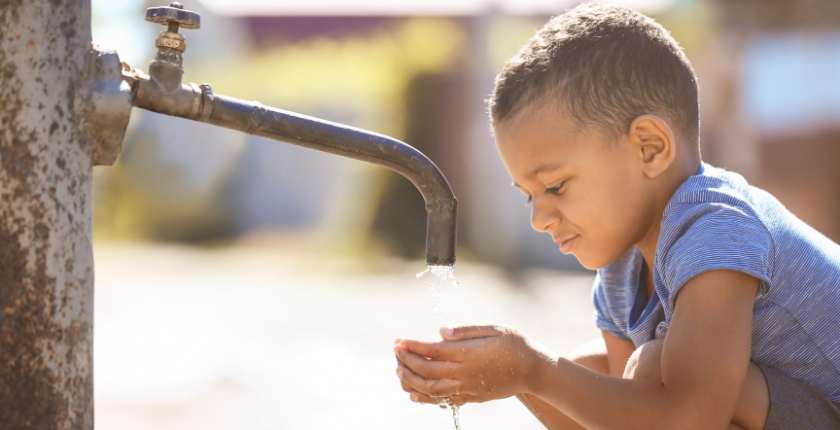
For many people in the UK, clean drinking water is something they rarely think about. For Fola, it is something she has dedicated her career to protecting.

“We’re fortunate in this country that we can turn on a tap and drink the water that comes out. We flush a toilet, and it gets treated properly. That’s not the reality everywhere in the world.”

Growing up in a developing country gave her a different perspective on the importance of water infrastructure and sanitation. Without clean water, communities struggle to thrive. Without effective sanitation, public health suffers.

“My long-term goal has always been to contribute to improving water and sanitation, particularly in Nigeria.”

Her passion even took her to Bolivia, where she spent a year working with the NGO Water for People during a sabbatical.

Engineering and Family Life Can Coexist

One of the biggest misconceptions about engineering is that career progression and family life cannot coexist. Fola’s experience tells a different story. Early in her career, another female engineer told her that the water industry was a great sector for raising a family. Years later, she agrees.

“I’ve got two children, and I’m still able to achieve in my career. I’m a Lead Process Engineer, but I’m also able to do school drop-offs, pick-ups, and attend sports days. Nobody bats an eyelid.”

For Fola, one of the water sector’s greatest strengths is that it allows professionals to pursue ambitious careers while maintaining a healthy work-life balance.

“It’s possible to give fully to your work and still be present for your family.”

The flexibility and culture within the sector have enabled her to continue progressing professionally whilst remaining present for the moments that matter most at home. For women considering engineering careers, she believes this is an important message that often gets overlooked.

Mentorship

The Power of Mentors

Ask Fola what has helped her most throughout her career, and she doesn’t mention qualifications or promotions. She talks about people. Specifically, mentors.

“One of the most important things I tell people is to find someone you can ask what feels like a silly question without feeling silly.”

Over the course of her career, she has worked with multiple water companies, consultancies and delivery organisations, building a trusted network of experienced professionals along the way. Today, she jokingly refers to them as her “dream team”.

Whenever she encounters a challenge, a difficult decision or a technical question she hasn’t faced before, she knows exactly who to call.

“I don’t think it’s necessary to know everything about any job you’re doing. What’s important is having people around you who can help you know everything and whose knowledge and experience you can tap into.”

For Fola, one of the most valuable things any engineer can do is build relationships, stay connected and never be afraid to ask questions.

Build relationships. Stay curious. Never stop learning.

Confidence

Confidence Doesn’t Mean Knowing Everything

One of the most powerful insights from Fola’s career is her perspective on confidence. Too often, confidence is mistaken for having all the answers. For her, it’s something entirely different.

“I have a good relationship with not knowing everything.”

She explains that confidence comes from being willing to ask questions, admit when you’re wrong and learn from the people around you. She believes true confidence comes from being humble enough to recognise what you don’t know, whilst being strong enough to challenge when you do.

This perspective has helped her navigate more than two decades in a highly technical industry and has become one of the defining characteristics of her leadership style.

ommunication

Engineering Needs Better Communicators

While technical knowledge remains essential, Fola believes one of the most overlooked engineering skills is communication. Today, she is working as a consultant for Advance TRS at the Kier Group on Southern Water‘s AMP8 programme as a Lead Process Engineer.

Her role involves liaising between Southern Water and multiple design partners, ensuring projects are delivered to the required standards, meet programme objectives and remain aligned with client requirements.

“I liaise between the client, Southern Water, and the design partners to ensure that the design they’re delivering meets the standards of the industry and the water company’s requirements.”

What she enjoys most isn’t necessarily the technical detail itself. It’s helping different groups understand one another.

“Engineers are very logical. We love numbers and solving problems, but we’re not always the best at explaining our ideas.”

Throughout her career, she has developed a reputation for bridging the gap between technical teams and non-technical stakeholders. Her role regularly requires her to work with engineers, project managers, senior leadership teams and clients, helping everyone understand what is being delivered and why.

“I love being able to explain engineering to non-engineers in a way they understand.”

She sees herself as a translator between different groups, helping engineers feel understood whilst ensuring clients and leadership teams remain confident in the decisions being made. As projects become increasingly complex and collaborative, she believes communication skills are becoming just as important as technical expertise.

Alongside communication, she credits much of her success to organisation, time management and the ability to balance competing priorities.

“You’ve got to carry a lot of things at the same time and know when to put one down and when to pick another up.”
STEM

Encouraging the Next Generation

Alongside her engineering career, Fola volunteers with The Girls Network, mentoring young women and helping them explore future career opportunities. Her message is refreshingly simple.

“If you like it, if you enjoy it, don’t let anybody convince you that you shouldn’t do it.”

She regularly speaks to students about her experiences and wants more young women to understand that engineering is not only accessible but also incredibly rewarding. Through her mentoring work, she has spent time supporting girls during some of the most important years of their education.

Rather than simply discussing careers, she works with them over an extended period, helping them navigate school life, future choices and confidence challenges.

“Sometimes it’s about being another adult in their life who isn’t a teacher or a family member.”

She hopes that by sharing her experiences, more young women will see engineering as a realistic and exciting career path. Whilst she has seen positive changes during her career, she would still like to see more women progressing into senior engineering leadership positions.

“There are more women coming through, but I’d still like to see more women in engineering leadership roles.”

For Fola, encouraging the next generation isn’t just about increasing numbers. It’s about ensuring talented young women never rule themselves out of opportunities where they could thrive.

Water Sector

Why the Water Industry Still Excites Her

After two decades in the profession, Fola remains as enthusiastic about the water sector as ever. For her, water is unlike any other industry because its purpose is so fundamental.

“One day, we may replace fossil fuels, but we’ll never replace water. There’s no substitute. Water is essential to life.”

The industry continues to evolve, facing new environmental challenges, population growth, emerging contaminants and increasing demands on infrastructure. For engineers, that means endless opportunities to innovate and make a difference.

“Everybody deserves clean drinking water. Everybody deserves good sanitation. That’s why this industry matters.”

For Fola, the water sector offers something many industries cannot.

“It’s engaging. It’s interesting. It’s challenging. It can take you all over the world.”

Despite often being perceived as highly technical, she believes the industry is far more welcoming than many people realise.

“It’s not a scary industry. It’s a welcoming industry. There is so much opportunity and so much camaraderie.”

For those looking for a career with long-term prospects, she believes few sectors can match the water sector.

“If it’s an industry that you want longevity in, the water industry is the way forward.”

Whether working in design, delivery, operations, project management or environmental protection, she believes there has never been a better time to build a career in water

“As a person in engineering, I would encourage people to work on as many different aspects of the industry as possible. It makes you a better all-round engineer.”

Her advice is simple:

Take opportunities when they come. Learn from different environments. Build experience wherever you can. “No opportunity is wasted. It’s all part of the portfolio you’re building.”

Some of the projects she is most proud of have involved multidisciplinary teams bringing together civil, mechanical, electrical and process engineering expertise to solve complex challenges. For Fola, engineering is at its best when different disciplines come together to solve problems and improve outcomes. One particularly rewarding moment came recently when she discovered that one of the first treatment processes she ever designed was still operating successfully.

“I was very pleased to hear that what I designed was still functioning and working well.”

For an engineer whose motivation has always been improving lives and protecting the environment, seeing the long-term impact of her work remains one of the most satisfying parts of the profession.

Career Opportunities

Finding the Right Opportunities

Fola also credits strong recruitment partnerships with helping her navigate her career. Having worked with multiple organisations across the water sector, she believes finding a recruiter who genuinely understands your career goals can make a significant difference.

One relationship in particular has stood the test of time. Fola has worked with Stuart Minchin for almost two decades, following him across different organisations as his career progressed. Over the years, Stuart has supported her through key career decisions, provided honest advice, and helped connect her with opportunities that aligned with her long-term ambitions.

“A good recruiter is worth their weight in gold.”

She believes the best recruiters do more than simply match candidates with jobs. They provide perspective, advice, encouragement and sometimes help people recognise their own potential.

“Stuart has understood what I was looking for throughout my career. It’s never just been about filling a role. It’s been about finding the right opportunity.”
“They negotiate on your behalf. They can be the bad cop to your good cop. A good recruiter has your interests at heart.”

In fact, one conversation with a recruiter helped change how she viewed herself professionally. Several years ago, she was approached about a Lead Process Engineer role and immediately dismissed the opportunity.

“I didn’t think I was ready.”

The recruiter challenged her thinking and encouraged her to look at her experience differently. The role had deliberately been advertised at a slightly lower level because they knew talented engineers often underestimate their own capabilities. Although she didn’t pursue that particular position, the conversation stayed with her.

When a Lead Process Engineer opportunity came along later through Advance TRS and Stuart Minchin, she approached it with a completely different mindset.

“I thought, actually, maybe I am ready.”

Looking back, she believes that conversation played an important role in helping her recognise her own capabilities. It’s a reminder that confidence isn’t about knowing everything. Sometimes it’s about trusting the experience you’ve already built.

Reflecting on her experience working with Advance TRS, she says:

“I feel like I’m in good hands and safe hands with Stuart Minchin and Advance TRS. I have received great advice throughout my career and been exposed to some great job opportunities.”

Connecting Exceptional Talent with Industry-Leading Projects

Fola’s story highlights exactly why the engineering and infrastructure sectors continue to thrive when talented women are given opportunities to develop, learn and grow.

Her technical expertise, leadership, communication skills, commitment to mentoring others and passion for improving lives through engineering make her an outstanding example of the professionals helping shape the future of the water sector.

At Advance TRS, we’re proud to support professionals like Fola and connect exceptional engineering talent with some of the UK’s most important infrastructure projects.

This is the calibre of talent we attract, support and represent across the water, rail, energy & renewables, aviation, buildings, highways, defence and wider infrastructure sectors.

Whether you’re looking for your next engineering opportunity or searching for specialist talent to strengthen your team, Advance TRS provides the expertise, network and industry knowledge to help you succeed.

At Advance TRS, we understand the pressures project leaders face. That’s why we offer flexible staffing solutions tailored to help you scale up or down with ease — without compromising on quality, compliance, or project timelines.

In today’s fast-paced infrastructure environment, project demands can shift rapidly. Whether you’re delivering a major rail upgrade, managing a water resilience programme, scaling up energy infrastructure, or tackling aviation or construction deadlines, having the right people in place at the right time is critical.

Supporting Projects with Temporary, Contract, and Permanent Hires

Our clients often operate across multiple workstreams with varying needs — from urgent short-term contractor cover to long-term permanent placements. Advance TRS provides a comprehensive resourcing service, covering:

Our dedicated account managers and recruitment consultants work closely with your internal teams to understand your project schedules, skills requirements, and hiring challenges — then deliver pre-vetted, qualified candidates who are ready to hit the ground running.

Built for Complex Infrastructure Environments

We specialise in sectors where quality, safety, and compliance are non-negotiable. Whether your projects are regulated, safety-critical, or require niche engineering capabilities, our industry knowledge ensures that our staffing solutions meet the unique demands of:

From sourcing PTS-certified rail operatives to hiring specialist design engineers or commercial managers, our sector-specific expertise ensures your resourcing partner speaks your language and understands the pressures on delivery teams.

Flexibility Without the Risk

Hiring at pace doesn’t have to mean sacrificing quality or increasing your compliance risk. We’re ISO-certified and experienced in managing onboarding, right-to-work checks, training records, and ongoing contractor management. Our robust systems give you full transparency and peace of mind.

By partnering with Advance TRS, clients benefit from:

  • Rapid mobilisation of skilled professionals
  • Scalable recruitment support aligned to project phases
  • Reduced internal hiring admin and cost
  • Compliance-led contractor onboarding
  • Dedicated account management for long-term success

Need to scale your team?
Whether you’re planning for the next phase or reacting to shifting deadlines, Advance TRS can help you respond with confidence. Speak to our team today about flexible staffing solutions built for infrastructure delivery.

Get in touch today.

Meet the team.